
The 8 Most Coach Hire Friendly Cities in Europe for Group Travel in 2026
Published 31st May 2026
Planning group travel across Europe sounds straightforward until you actually start organising transport. Some cities are built for coaches. Others seem designed to make large vehicles suffer.
Between low emission zones, restricted old towns, expensive parking and narrow streets, the difference between a smooth coach trip and a logistical headache often comes down to the destination itself.
For schools, corporate groups, sports fans, tourists and event organisers, choosing coach hire friendly cities in Europe can make a huge difference to cost, timing and overall experience.
The cities below consistently stand out for accessibility, coach infrastructure, parking availability, road quality and group-friendly layouts. They also tend to work well for multi-stop European tours, making them popular with operators planning longer itineraries.
If you are arranging transport for a large group, these are some of the best European cities for coach travel in 2026.
What Makes a City Coach Hire Friendly?
Not every popular tourist destination works well for coaches.
Some places may be beautiful to visit but difficult to navigate with larger vehicles. Historic centres often restrict access, while busy urban layouts can create delays and expensive parking problems.
The most coach-friendly cities in Europe usually have:
Dedicated coach parking zones
Simple motorway access
Efficient drop-off points near attractions
Good signage for larger vehicles
Reasonable low emission zone policies
Hotels designed for tour groups
Wide roads and manageable traffic flow
Cities that regularly host conferences, sporting events and tourism groups also tend to have much stronger transport infrastructure overall.

Amsterdam, Netherlands
Amsterdam remains one of the most organised cities in Europe for coach operators despite its busy reputation.
The city has invested heavily in structured group transport systems, including designated coach drop-off zones and park-and-ride facilities outside the centre. While central access restrictions exist, they are generally well signposted and manageable when planned properly.
For tour operators, Amsterdam works particularly well because many key attractions are relatively close together. That reduces unnecessary driving time once groups arrive.
Coach groups commonly visit:
Rijksmuseum
Anne Frank House
Canal districts
Keukenhof during spring
Zaanse Schans windmills
Amsterdam also connects well with Belgium and Germany, making it a common stop on wider European coach itineraries.
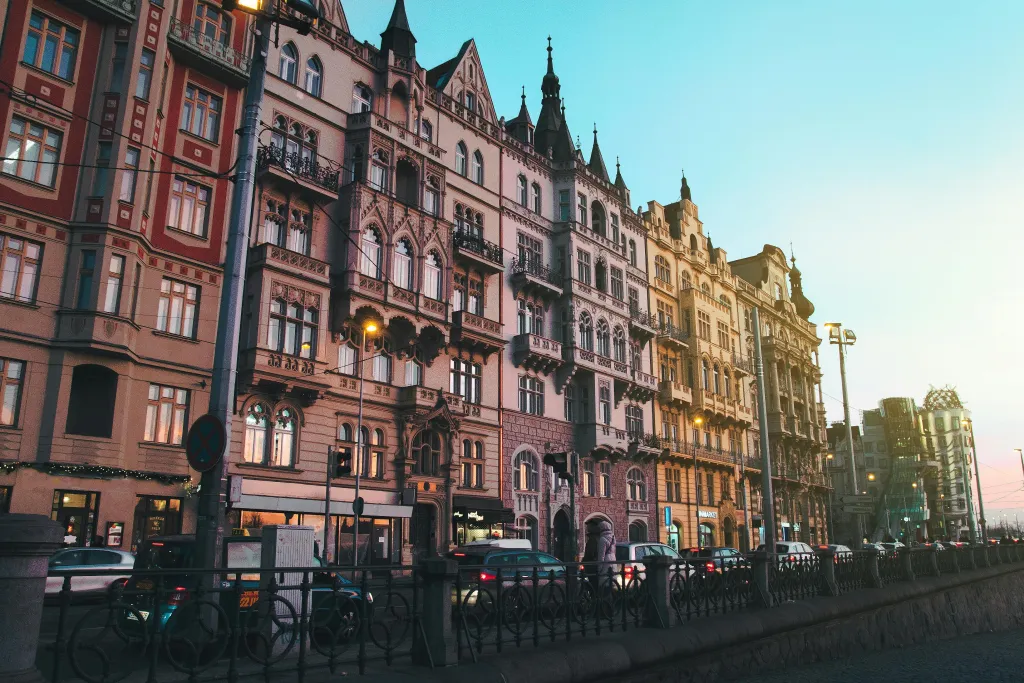
Prague, Czech Republic
Prague has become increasingly popular with coach operators because it offers a strong balance between accessibility and affordability.
Unlike some Western European capitals, parking costs and hotel rates remain affordable for groups. The road network around the city is also easier to navigate than many visitors expect.
The historic centre does have restrictions, but most major tourist areas remain accessible through organised drop-off systems.
For school trips and student mini bus and coach hire especially, Prague continues to rank highly among coach hire friendly cities in Europe thanks to:
Affordable accommodation
Walkable attractions
Group dining availability
Strong tourism infrastructure
Reliable motorway links
It also pairs naturally with Vienna, Budapest and Krakow for longer Central European routes.
Vienna, Austria
Vienna feels built for organised travel.
The roads are wide, the signage is clear and coach parking is generally better managed than in many comparable capital cities. Even during busy tourism periods, the city tends to remain relatively efficient from a transport perspective.
Vienna is especially popular for:
Music and cultural tours
Corporate group travel
Educational trips
Luxury European coach tours
The city's structured traffic systems make logistics far simpler for drivers managing larger groups.
Another major advantage is hotel accessibility. Many group-friendly hotels are positioned with coach access in mind, reducing awkward city-centre manoeuvring.
Barcelona, Spain
Barcelona can look intimidating for coach travel at first glance, but it is actually one of the better-equipped Southern European cities for organised groups.
Dedicated tourist coach parking near major attractions helps keep group movement relatively efficient. Areas surrounding the Sagrada Família, Montjuïc and the waterfront are particularly well prepared for larger vehicles.
Traffic can still be heavy during peak season, especially in summer, but the city benefits from:
Large road layouts
Strong motorway connections
Purpose-built tourism infrastructure
High hotel capacity for groups
Barcelona also works well as both a standalone destination and part of wider Spain or South France coach tours.
Munich, Germany
Germany performs well for coach travel, and Munich is one of the strongest desitnations.
Road quality is consistently excellent, motorway access is straightforward and group transport facilities are well organised. Coach parking around major tourist areas is also far easier than in many comparable European cities.
Munich regularly hosts:
Business conferences
International exhibitions
Football tourism
Oktoberfest visitors
School and university groups
That constant flow of organised travel has helped the city develop practical systems for larger vehicles.
For groups planning Alpine routes, Munich also acts as an excellent gateway into Austria, Switzerland and Northern Italy.
Budapest, Hungary
Budapest has quietly become one of the most practical destinations for European coach tours.
The city combines attractive pricing with increasingly strong tourism infrastructure. Hotels catering specifically to group travel have expanded significantly over recent years, and coach access has improved across key visitor areas.
The Danube riverfront, thermal baths and historic districts attract a broad mix of tourists, while road access into the city remains relatively straightforward compared to many older European capitals.
For budget-conscious group organisers, Budapest delivers strong value without sacrificing the overall travel experience.
Paris, France
Paris is not the easiest city for coach travel, but it remains surprisingly workable when properly planned.
The key difference is infrastructure. Paris handles huge tourism volumes every year, so despite congestion and restrictions, systems are already in place for group transport.
There are extensive coach parking areas throughout the city, particularly near major attractions and museums.
The biggest challenge tends to be timing rather than access itself. Peak traffic periods can dramatically slow movement across the city.
Still, for many European tours, Paris remains highly worthwhile for group travel.
Krakow, Poland
Krakow continues to grow in popularity for coach hire and organised group travel.
The city centre is compact enough to explore largely on foot once groups arrive, while outer access roads remain workable for larger vehicles.
Coach operators often favour Krakow because it offers:
Lower accommodation costs
Good motorway connections
Easy airport transfers
Efficient group logistics
Strong cultural appeal
Educational tours visiting Auschwitz and wider historical sites also frequently use Krakow as a base.
Which European Cities Are Hardest for Coach Hire?
Not every destination suits large group transport.
Cities with older layouts, limited parking and strict environmental restrictions can create serious difficulties for coaches.
Destinations that often require extra planning include:
Venice
Dubrovnik
Santorini
Bruges
Positano
That does not mean coaches cannot operate there. It simply means route planning, permits and transfer logistics become much more important.
In many cases, groups may need to transfer onto smaller local transport systems for the final part of the journey.
Why Coach Travel Across Europe Is Growing Again in 2026
Group travel patterns have shifted noticeably over the last few years.
Rising flight costs, airport disruption and sustainability concerns have pushed many organisers back towards coach transport, particularly for shorter European routes.
Modern coaches now offer:
WiFi
USB charging
Reclining seating
Lower emissions
Better luggage capacity
More flexible itineraries
For sports teams, schools, wedding groups and business travel, coaches also simplify coordination compared to splitting groups across multiple trains or flights.
As a result, demand for coach hire friendly cities in Europe continues to increase heading into 2026.
Planning Multi-City Coach Tours Across Europe
Many of the best European cities for coach hire naturally connect together within practical driving distances.
Popular combinations include:
Central Europe Route
Prague → Vienna → Budapest
Western Europe Route
Amsterdam → Brussels → Paris
Southern Europe Route
Barcelona → Nice → Milan
Germany and Alps Route
Munich → Salzburg → Innsbruck
Choosing cities with strong coach infrastructure makes these longer routes significantly easier to manage for both passengers and drivers.
Choosing the Right Coach Hire Company for European Travel
The city itself matters, but so does the operator you choose.
An experienced European coach hire company will already understand:
Low emission zone requirements
International driving regulations
Coach parking permits
Border crossing procedures
Group hotel access limitations
Route planning around restrictions
That experience can save a huge amount of stress during longer trips.
If you are organising international group transport, it is also worth choosing a provider with experience handling European itineraries specifically, rather than only UK-based journeys.
At SMC coach hire, we have over 10 years of experience in offering group tours in the UK and across tours across Europe, helping schools, businesses, sports teams and private groups travel comfortably and efficiently. To learn more about our UK tours and European tours, visit our mini bus hire and coach hire service page.